Friday, November 23, 2012

Assholes: A Theory


Aaron James

Aaron James is a political philosopher at UC-Irvine, and despite its eye-catching title and mass appeal, Assholes: A Theory is indeed a piece of philosophy. I expected this going into the book, but I still thought I would find James’s tongue planted firmly (or at least gently) in cheek. But this is sincere work, and contains some genuinely valuable philosophy. It does lack some of the rigour associated with contemporary analytic philosophy, and in the acknowledgements James admits to having “relaxed” his standards to some extent. But James also shares, like me, the skepticism most professional philosophers feel about “pop philosophy,” and I must say that his book fares extremely well in this regard, compared with some of the lay philosophy churned out over the last decade or so.

James’s subject is the asshole, the person who (wrongly) believes himself—assholes are almost invariably male—to be worthy of special treatment due to an entrenched sense of entitlement. Entire chapters are spent discussing this definition itself, and there are also chapters on how assholes differ from mere “jerks” or “pricks,” assholes and gender, and how assholes can negatively impact capitalism, including a game-theoretic appendix on the subject. What we are not given is much useful advice about what to do about assholes. This is partly because James is a bit despairing on the matter, but I can’t help but think that more productive work on “asshole management” is indeed possible, at least on a philosophical level.

- Bill Cameron

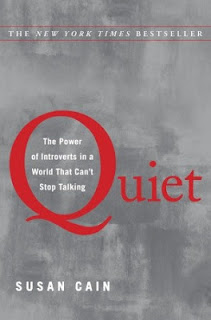
Quiet: The Power of Introverts


Susan Cain

Susan Cain spent five years officially—and her entire life unofficially—researching Quiet. This self-proclaimed introvert set out to write a book that would empower the quieter half of the population and increase awareness among parents, teachers, and employers.

As part of her extensive research, Cain visited an evangelical mega church, Harvard Business School, and a Tony Robbins seminar. While visiting the church, Cain discovered that “evangelical churches often make extroversion a prerequisite for leadership.” Some parishes even check Myers-Briggs scores and think twice “if the first letter isn’t an ‘E’ (for extrovert).” At Harvard, one of the students commented, “Good luck finding an introvert around here.” After watching Tony Robbins perform, Cain concluded that he has a “hyperthymic temperament, a kind of extroversion-on-steroids.”

I put on my teacher hat and paid particular attention to the interviews Cain conducted with Asian-American students living near Cupertino, California. While they excelled academically, many of these introverted students struggled with class participation and hit a brick wall in workplaces where “loudness and speaking out are the keys to popularity and financial success.”

Cain also interviewed successful introverts who have learned to survive and thrive in highly-charged workplaces. In fact, Susan Cain herself is a great example of an introvert who has managed to adapt, since she would never have be able to publish Quiet if she hadn’t convinced her publisher she was enough of a pseudo-extrovert to promote it. Cain helps us to understand the unique things introverts have to offer, and helps introverts to better understand themselves.


- Joanne Guidoccio

Shadow of Night


Deborah Harkness

With Shadow of Night, Deborah Harkness continues the complex tale she began in A Discovery of Witches, the first book of her All Souls trilogy, tracing the search of Matthew Clairmont, a centuries-old vampire, and Diane Bishop, a witch, for the magical manuscript Ashmole 782 throughout the continent of Europe, and through time itself.  Time-walking back through history to the Elizabethan period, when Matthew was a very different man (and vampire), Diana must learn how to control her burgeoning powers without destroying herself or those around her as she searches for the elusive manuscript.

Matthew’s personal experience of the past and Diana’s historical expertise allow them to navigate the tumultuous time period they walk into.  Through England, France, and Czechoslovakia, they interact with historical friends and foes, trying to keep Diana’s cover and gain the information that they need.

There’s much less tea-drinking in this book than the first, but more historical fact and action.  Matthew and Diana must learn (and relearn in Matthew’s case) how to act in a very different time.  Their relationship is pushed to the limit as they become accustomed to their new roles in society and the danger they face as a married witch and vampire.

If you loved A Discovery of Witches, you’ll eat up this second book of the trilogy. Following Matthew and Diana on their journey, you become caught up in their lives together as husband and wife, watching Diana as she struggles with her unpredictable and potentially dangerous powers and Matthew as he meets old friends.

- Lindsay Ly

Gone Girl


Gillian Flynn

A novel that would twist even Shakespeare’s mind!  Gillian Flynn has written an intriguing, dark, and intoxicating murder mystery about a criminal mastermind who is always a few steps ahead of his victims. In Gone Girl, Amy Dunne, the wife of Nick Dunne, disappears in what appears to be a home invasion on her fifth wedding anniversary. The police suspect foul play and the main suspect quickly becomes Nick, who is no husband of the year.

Nick expresses his innocence even when all the clues lead to him. His lying, deceitful, and laid-back behavior around his wife’s disappearance does not help him either.  As Nick has both the press and the police against him, he finds himself caught up in his own lies and teaming up with his twin sister Margo to prevent himself from going to jail. Police continue to find clue after clue: a silver box with a treasure hunt designed for him by his wife, a bleached kitchen with blood residues, a diary written by his compulsive, type-A personality wife, who is just as manipulative as Nick. The clues lead only to one option: Nick took Amy. But why are the clues so perfect that they leave no other option but Nick? Whoever said marriages are happily ever after never met this competitive, ambitious, vengeful couple.

Written from the perspective of both husband and wife, Gone Girl is intriguing and leaves you wanting to know more. Flynn offers a unique perspective into both the criminal’s and the victim’s mind. With a complex, original, and compelling plot, Gone Girls is definitely a must read for mature adults!

The Selector of Souls

Shauna Singh Baldwin

“A taste of sweetness” is the definitive feminine quality women bring to the world, reflects Damini, one of the two main characters in Shauna Singh Baldwin’s latest novel, The Selector of Souls. Yet it is sweetness that Damini is unable to taste following her desperate actions at the novel’s opening. In this richly layered book spanning 1994 to 2005, the at first parallel and then entwined stories of Anu and Damini are deftly recounted.

The novel is full of often violent contrasts: male and female, sweeper caste and VIP, Catholic versus Hindu and Sikh. The women are caught in India’s intense conflicting facets of culture, faith, and caste. They experience the fact that “one woman’s story is nothing like another’s” and yet they both struggle to assert themselves against the dominant culture so focused on men. “A boy, a boy, everyone wants a son,” complains Vikas, Anu’s abusive husband, at the birth of their daughter Chetna. The extremes within Indian culture are exposed, from the odious “gendercide” practices of girl-child abandonment, sex selection by ultrasound, wife beating and honour killings, bride price and dowries on the one hand, to karma, reincarnation, the warmth of extended family, and the comfort of close rural roots and shared hardship on the other.

The novel’s climax coincides with the India’s emergence as a nuclear power, closely followed by Pakistan’s—the hell to India’s heaven or is it vice versa? The constant clash of nations is set against the war of the sexes and the war between the landowners and the village peasants, each doomed; each relationship seems to repeat patterns of intolerance. Yet within the novel, an elemental female force returns the possibility of balance to the world. Anamika Devi, the essential female goddess, is worshiped through a few rupees thrown in a simple pot. The cave she occupies, however, houses two pivotal scenes in the novel and holds surprises as mysterious as the echo in E. M. Forster’s Marabar Caves in A Passage to India.

Singh Baldwin, in the great Indian tradition, weaves a story splendid in details and majestic in scope. You may find yourself in search of some sweetness to leaven the bitterness, but you will not easily forget this perceptive tale.

- Rosslyn Bentley

Sunday, November 18, 2012

Skin and Bones Time: The Hunger Angel


Herta Muller

In a Stalinist labour camp, the hunger angel is not a guardian of souls, but a demon that drives the starving mad.  He sits on the heart-shaped shovel and measures out the lives of the digging prisoners, each load of coal equaling one gram of bread.  Before people die, hunger fur grows in the hollows of their cheeks; the ghost of a hare appears in their faces.

At the end of World War II, Leo Auberg is deported to a gulag only because he is a Romanian-born German. He survives through his love of words and his hunger-fuelled, hallucinatory consumption of life.  Everyone at the camp has hunger words: words that they feed on, names of foods, and memories—their escape words.

The lyricism and inventiveness of Herta Muller’s writing make this heartbreaking book palatable. It is divided into anecdotal chapters, like small bites, which makes the story easier to digest. The details, which could only be witnessed by someone in a gulag, are astonishing: a cap taken off during a roll call freezes to the ground and has to be pried off;  bread is traded by the desperate prisoners because as it dries its appearance shifts, making some pieces appear bigger than others; the gob of shaving foam blown off a barber’s hand by a sigh lands between his galoshes, which are tied at the ankles with copper wire.

Herta Muller, who won the Nobel Prize for literature in 2009, based her novel on the experiences of her mother and of a poet friend, Oskar Pastior.  The gulags were a taboo subject in Romania until the fall of communism.

- Kasia Jaronczyk

Catherine the Great


By Robert K. Massie

Pulitzer Prize-winning author Robert K. Massie has produced a masterful biography of one of the greatest political leaders of the eighteenth century, a century of great empires and powerful leaders.

We witness Catherine’s convoluted ascent from obscure German nobility onto the world stage as Matushka, mother of all Russia. Drawing on extensive memoirs and letters, Massie provides insights into the Empress’s thinking as she schemes and manipulates friends, lovers, and adversaries.

Intensely ambitious and intelligent, Catherine applied her brilliant diplomatic and political skills to making Russia a great power, also amassing one of the world’s great art collections. She embraced the Age of Enlightenment, developing friendships with Voltaire and Diderot. She spent two years creating a new code of laws for Russia, inspired by the writings of Montesquieu. She even considered freeing the serfs, but fears raised by the French Revolution and the Pugachev rebellion in Russia quickly ended such thoughts.

In various ways Catherine’s lovers strongly influenced her reign. In collusion with Prussia’s Frederick the Great, she manipulated her former lover, Stanislaw August Poniatowski, first installing him as King of Poland-Lithuania, later dismantling his realm, which completely disappeared for more than a century, enlarging her own empire in the process. Grigory Orlov, an influential military officer, was instrumental in the overthrow of Catherine’s estranged and mad husband, Emperor Peter III, who reigned for only six months, and in her accession as absolute monarch.

Grigory Potemkin, her lover and principal advisor for 17 years, put down the Pugachev rebellion, and in military action against the Ottoman Turkish Empire, secured the Crimea and Black Sea coast as Russian territory.

In a review in the New York Times, Kathryn Harrison described Massie as “a biographer with the instincts of a novelist.” I certainly found his book to be a page-turner.

- D’Arcy McGee